
Did you know that kids love using whiteboards? If you didn’t, you might be thinking… why do they? Whiteboards are exciting to kids for a few reasons:
It’s different than pencil and paper, so it feels “shiny and new”
It feels fun to get to choose a colored marker
They have more space than on paper
Kids can erase easily and start over!!!
One complaint I often hear from students is that there isn’t enough space on the paper to do their work. Whether that be for handwriting reasons or organization reasons, whiteboards can minimize the anxiety of working in confined spaces. Students’ thinking shouldn’t be limited to the space they think they have to work in based on the workbook; that’s not what math is assessing. I’m always a proponent of: if you don’t like the space they give you, go get more space - whiteboard or extra paper.
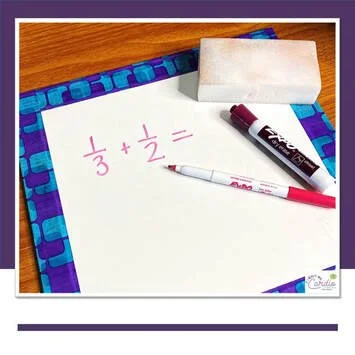
The third reason I listed is the most appealing for kids. Whiteboards, or “non-permanent surfaces” as Peter Liljedahl calls them, are valuable tools that promote thinking and cultivate joy in learning. When students feel less risk, they are more willing to try. This is especially true for students who are perfectionists! Whiteboards feel less permanent than pencil on paper, so kids will gravitate to them. Whiteboards open the door to a world of math possibilities!
Whiteboards are a staple in my classroom. Almost every day, my students ask to use either a personal whiteboard to do their math work or the large whiteboard in our room. It eliminates fear and overwhelm and gets the students working a lot faster than when they have paper. The large whiteboard is not just for the teacher. I love when kids use it and welcome them to use it. It gives them freedom to be creative and explore what otherwise may feel daunting.
Whiteboards are also a great way for kids to see their learning “out loud”. When kids can see their work on a larger surface, it can help their brains process what they did, and it also makes them feel important. When we are working through problems as a group, I always ask students to write their example on the whiteboard for everyone to see. It gives the child a sense of pride and joy.
Of course, one caveat with whiteboards is that you cannot save the work they did because once it is erased, it is gone. If it is routine practice, there is no harm in keeping it all on the whiteboard. However, if they are working on a homework set, they should transfer it from the whiteboard to paper before erasing. Kids will be more willing to transfer their work after having already worked it out on the handy dandy whiteboard. Give them extra paper if they need more space.
The point of the whiteboard as a learning tool is to reduce the fear of making mistakes when figuring out how to solve a problem. Once a problem is solved, the child should transfer their work to paper so they can remember it at a later time and/or show what they did with the teacher. I implement this practice with my students in class. Some work can just be on the whiteboard, but sometimes they also need to write it down on paper.
The Bottom Line: If you have a perfectionist at home, a child who is afraid to make mistakes, or a child who resists doing math, get them a whiteboard. Whiteboards aren’t just for school! Whiteboards can be as easy as putting a peel-and-stick whiteboard on a wall in your playroom or purchasing actual mini boards that you can keep anywhere. Bonus tip, when kids are standing their brains work harder. You will not regret it! Watch angry scribbling and frustration turn into fun and risk-taking!
